
Principles of Reliability in Modern Healthcare
Reliability is not an abstract value in healthcare. It’s the backbone that supports every decision, transaction, and patient interaction. In an environment where precision and compassion must coexist, reliability becomes the measure of excellence.
Today’s global healthcare systems rely on partnerships that extend beyond hospitals and clinics. Data, communication, and accountability flow between multiple networks. As systems expand, so does the need for steady, trusted support.
Here, Care Agent BPO plays a vital role in establishing continuity across complex structures. By managing information accurately and supporting clinical and administrative teams, reliability becomes tangible. It’s felt in every response, every record, and every patient interaction.
Empathy and Accuracy in Patient Experience

True reliability begins with people. The patient experience defines how trust is built and sustained. Each moment, from scheduling to discharge, influences how patients perceive care. When systems function smoothly, confidence follows naturally.
Reliability in patient engagement means anticipating needs. It’s about ensuring that communication remains open and that updates reach patients before they have to ask. Coordinated processes allow teams to respond faster, guiding patients through care with assurance and clarity.
Technology amplifies this connection. Automated reminders, real-time updates, and AI-driven support enhance every interaction. Yet it’s the human side, empathy and listening, that creates long-term loyalty. The result is a unified experience where accuracy and compassion coexist.
Integration and Adaptability in Support Services
Every reliable system needs a framework of consistent support services. These services ensure that healthcare organizations can handle both predictable workflows and sudden challenges. Whether managing data entry, appointment logistics, or follow-up communication, structured support enables continuity.
In modern settings, adaptability defines quality. Teams must pivot between administrative accuracy and patient-focused response. Reliable systems integrate automation and trained personnel to manage that balance effectively.
Coordination among departments reduces errors, while shared visibility keeps every task aligned with the organization’s larger goals. Support services act as both the foundation and the connective tissue of healthcare delivery, steady, reliable, and responsive to change.
Consistency and Transparency in Medical Billing
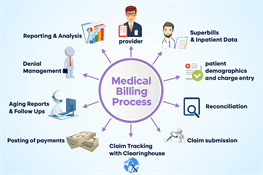
The trust between patient and provider extends into financial care as well. Medical Billing represents both the technical and emotional aspects of healthcare reliability. A clear, accurate billing process reduces confusion, strengthens relationships, and ensures sustainability.
Billing errors can damage trust. Therefore, accuracy and transparency are essential. Reliable billing systems rely on clear documentation, automated claim tracking, and real-time status reporting. Each layer adds to the patient’s sense of security.
Teams handling billing processes now blend automation with personal review. This hybrid approach ensures that every claim reflects the care delivered and complies with evolving payer regulations. The outcome is a system that works efficiently while maintaining empathy and integrity.
Connectivity and Clarity in Communication Systems
As healthcare networks grow, the Healthcare Call Center Solutions and Healthcare Contact Center functions define operational reliability. These channels are where patients, providers, and partners connect in real time. Every conversation must be clear, compliant, and consistent.
Call centers are now more than just phone lines. They’ve evolved into digital communication hubs, using chat, email, and mobile tools to manage inquiries around the clock. Reliability here depends on trained representatives, strong software, and standardized workflows.
Through efficient routing, data integration, and multilingual support, these systems bridge distance and difference. Patients receive answers faster, providers gain actionable insights, and organizations maintain harmony across departments. Communication transforms from a task into a trusted experience.
The Future of Reliability in Connected Healthcare

Reliability in global healthcare depends on both people and process. Systems evolve, but the goal remains constant, to ensure that every action taken leads to better outcomes for patients and providers alike.
Across continents, reliable healthcare frameworks combine data intelligence with human understanding. They enable organizations to anticipate challenges and respond before disruptions occur. In doing so, they create ecosystems where efficiency and empathy reinforce each other.
Automation enhances scale, while trained professionals sustain quality. Together, they maintain balance, one that respects patients, supports staff, and drives better results. The future of healthcare reliability rests not only on innovation but also on the steady rhythm of coordination and care.
Reliability is what transforms routine operations into relationships. When systems work as intended, people notice. And when those systems are built with integrity, the result is trust that lasts.
Continuity as the Heart of Healthcare Connection
Healthcare excellence endures when reliability is seen not as a standard but as a commitment. Every patient, every process, and every interaction reflects that promise.
Organizations that value precision build foundations that last. They connect technology with understanding, automation with empathy, and progress with trust. These connections turn operations into outcomes and challenges into opportunities.
As the healthcare industry continues to evolve, the pursuit of reliability shapes its direction. The goal is simple yet profound, to ensure care that’s consistent, compassionate, and coordinated across every touchpoint. That’s the true measure of dependable healthcare in a connected world.